- By Dr. Benjamin Meath, MD (Family Medicine Physician)
- Medically reviewed by Dr. Sarah Tiggelaar, MD (Family Medicine Physician)
Want to buy prednisone online? Seventy years ago doctors found where inflammation stops. The answer was one corticosteroid — and it still is today. Few medications earn a place in twelve medical specialties at once. Prednisone does. It reaches inside your cells, shuts down the inflammatory cascade at its source, and delivers results within hours. Rheumatologists rely on it. Pulmonologists prescribe it. Dermatologists reach for it when nothing else works.
What Is Prednisone — and Why It Remains a Medical Staple
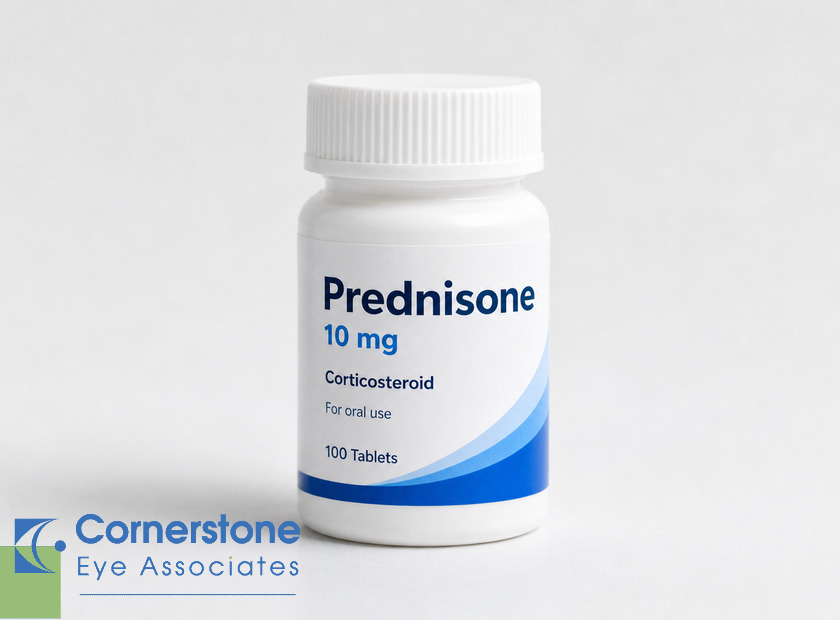
Prednisone is a steroid medicine used to reduce inflammation and quiet an overactive immune response. In simple terms, it helps when the body is reacting too strongly and causing swelling, pain, redness, or irritation. Doctors use it for many different conditions, including asthma flare-ups, severe allergies, autoimmune disorders, and inflammatory skin problems. So although the diagnoses vary, the main purpose stays the same: Prednisone helps bring inflammation under control.
One detail often confuses patients. Prednisone itself is not the final active form. After you swallow the tablet, your liver converts it into Prednisolone, which is the form your body actually uses. That is why Prednisone is called a prodrug. First it is processed, and only then does the full anti-inflammatory effect begin.
Once active, it works inside the cells by attaching to glucocorticoid receptors and changing how inflammatory signals are handled. As a result, the body produces fewer substances that drive swelling and irritation. This is why Prednisone can work quickly in the right situation. It does not simply cover symptoms for a few hours. Instead, it helps slow the inflammatory process itself.
Prednisone is often described as a man-made version of cortisol, a hormone your adrenal glands naturally produce. Cortisol helps regulate stress, immunity, and inflammation. Prednisone works through the same general pathway, but in a stronger and more controlled way. That gives doctors flexibility: the dose can be adjusted depending on how severe the flare is and how long treatment is needed.
This flexibility is one reason Prednisone has stayed relevant for so long. According to the National Library of Medicine, Prednisone is used in endocrine, rheumatic, allergic, dermatologic, respiratory, hematologic, and gastrointestinal conditions. It is also often compared with Methylprednisolone. That alternative is somewhat stronger per milligram and does not rely on liver conversion in the same way. Still, for routine oral treatment, Prednisone remains one of the most familiar first-line options, which is why many patients searching for information eventually come across phrases like buy Prednisone online.
Another reason it remains widely prescribed is simple: it can be used short term for a flare or tapered more gradually when longer control is needed. Few oral anti-inflammatory drugs offer the same balance of speed, range, and dose flexibility. That is why Prednisone still holds an important place in treatment across many specialties.
What Prednisone Treats: From Asthma to Autoimmune Disease
Prednisone is used when inflammation becomes strong enough to disrupt normal function and quick control matters. In practice, that can mean swollen joints, tight airways, an immune flare, or skin inflammation that does not settle with milder treatment. Doctors use it across many specialties because it works fast, the dose can be adjusted, and the same drug can help in very different clinical settings.
It may be prescribed as a short burst for an acute problem or used more carefully over time for chronic disease control. That flexibility is one reason Prednisone remains so common in daily practice. Patients also often ask questions like can i buy Prednisone over the counter, especially after asthma, allergy, or arthritis flares. However, Prednisone is not treated like a casual anti-inflammatory medicine. It is a prescription steroid, and the dose, duration, and taper usually need medical supervision.
Another important point is that Prednisone is not limited to one body system. It is used in rheumatology, pulmonology, dermatology, gastroenterology, hematology, nephrology, and ophthalmology. So while the diagnoses look very different on paper, the reason for prescribing it is often the same: inflammation is active, symptoms are escalating, and the body needs faster relief than gentler options can provide.
Where Prednisone Helps Most: Breathing, Joints, Skin, Gut, and More
Some of the most familiar uses are autoimmune and respiratory conditions. In rheumatoid arthritis, prednisone can reduce joint swelling and morning stiffness quickly, often within 24 to 48 hours. In systemic lupus erythematosus, it is used to calm flares and reduce the risk of organ damage.
Prednisone is also widely used in breathing disorders. For asthma exacerbations, a short course can reduce airway inflammation and lower the chance of worsening symptoms. In COPD, it is part of standard flare treatment as well. According to the GOLD guidelines, prednisone 40 mg daily for five days is the recommended treatment for COPD exacerbations.
Beyond those common indications, doctors prescribe prednisone in many other situations. The easiest way to understand it is by looking at the kinds of problems it helps control.
- Severe allergic reactions — when antihistamines are not enough and swelling or irritation needs stronger control.
- Asthma and COPD exacerbations — to reduce airway inflammation and help breathing recover faster.
- Skin disease flares — including severe eczema, dermatitis, and pemphigus vulgaris.
- Inflammatory bowel disease — especially during active Crohn’s disease or ulcerative colitis flares.
- Eye inflammation — such as uveitis, where quick control may help protect vision.
- Autoimmune disease control — including rheumatoid arthritis, lupus, vasculitis, and polymyalgia rheumatica.
- Blood disorders — such as immune thrombocytopenic purpura and related immune-driven conditions.
- Kidney conditions — including nephrotic syndrome and selected inflammatory renal disorders.
- Neurologic relapses — for example, in some multiple sclerosis flare situations.
- Adrenal replacement settings — in selected endocrine cases where corticosteroid support is needed.
This broad range of use explains why prednisone remains one of the most recognized steroid medicines in clinical practice. According to Mayo Clinic, it provides anti-inflammatory relief across virtually every body system. That does not mean it is routine or harmless. It means the drug is versatile, fast-acting, and effective when inflammation needs to be brought down with precision.
Prednisone Cost Without Insurance and Savings Options
Prednisone is one of the more affordable prescription medications, especially in its generic form. Without insurance, a 30-tablet supply of prednisone 20 mg often starts at about $35, although the final price can vary by pharmacy. In most cases, larger quantities bring the cost per tablet down. Patients comparing local and digital options also often look into where to buy Prednisone online to save money and simplify access. In the US, GoodRx coupons can lower pharmacy prices by 40 to 80 percent, and many insurance plans, including Medicare Part D, usually cover generic prednisone with a low copay.
How to Get a Prednisone Prescription Online in the US
You can buy Prednisone online legally in the United States, but only with a valid prescription. This is not an over-the-counter medication. Prednisone affects immune activity, inflammation, hormones, and metabolism, so a doctor needs to decide whether it is appropriate and how it should be used. The good part is that this no longer always means an in-person visit. Many licensed telehealth providers now handle the process online.
Can you buy Prednisone over the counter at a US pharmacy? No. A prescription is required in every state, whether you use a neighborhood pharmacy, a mail-order service, or an online provider. The same applies to people asking, can I buy Prednisone over the counter abroad and bring it back? In practice, small personal imports are sometimes allowed through, but that does not make it the recommended route. In most cases, it is safer and simpler to go through a licensed US medical provider.
For many patients, telehealth is now the easiest option. A licensed physician can review your symptoms online, check whether prednisone fits the situation, and send a prescription electronically when appropriate. Because Prednisone is not a controlled substance, the process is usually more straightforward than with tightly regulated medications. So the whole path from evaluation to treatment can feel much faster and less stressful.
You start with a short intake form. Usually, it asks about your symptoms, current medications, allergies, and basic medical history. It does not take long, but it gives the clinician the context they need. The information is submitted through a secure, HIPAA-compliant platform, just like with any standard medical visit.
After that, a US-licensed doctor looks at your information and decides whether prednisone makes medical sense. They check for the reason it is being requested, look for possible drug interactions, and make sure there are no obvious safety concerns or contraindications. This step is important because prednisone can be very effective, but it is not something that should be used casually.
If the doctor approves treatment, the prescription is sent electronically to the pharmacy you choose. In many cases, that happens the same day or within 24 hours. Then you can either pick it up locally or arrange delivery, depending on the service. That makes the process much easier, especially when you need treatment quickly and would rather avoid an office visit.
Our Family Medicine Physicians

Prednisone Dosage: Strengths and Standard Dose Ranges
Prednisone is not a one-dose-fits-all medication. It comes in several tablet strengths, including 1 mg, 2.5 mg, 5 mg, 10 mg, 20 mg, and 40 mg, which gives doctors room to adjust treatment with precision. That matters because prednisone may be used in very different ways. One patient may need a short high-dose burst for an asthma flare. Another may need a lower daily dose for longer control of an autoimmune condition.
The right dose depends on more than the diagnosis alone. Physicians also look at symptom severity, body weight, age, response to treatment, and medical history. Diabetes, high blood pressure, infection risk, osteoporosis, and other medications can all affect how prednisone is prescribed. So while patients often search for simple answers about prednisone dosage or wonder whether prednisone 20 mg is considered low or strong, the real answer always depends on the clinical context.
Typical Prednisone Dosing Patterns by Condition
These are common clinical ranges, not fixed rules. Some patients need a shorter course, a slower taper, or a weight-based adjustment depending on how severe the flare is and how their body responds.
Typical course: 5-10 days
Typical course: 5 days
Typical course: Ongoing, using the lowest effective dose
Typical course: Weeks to months, depending on flare severity
Typical course: 12-24 months with gradual adjustment
Typical course: 3-7 days
Typical course: Around 4-8 weeks, often with tapering
Typical course: Ongoing replacement therapy
Patients often ask what counts as a high dose of prednisone. In broad clinical terms, more than 40 mg per day is usually considered high-dose, while less than 7.5 mg per day is generally considered low-dose. A dose like prednisone 20 mg usually falls somewhere in the middle for most adults. Still, those labels are only rough reference points. A moderate dose for one condition may be aggressive for another.
That is why prednisone should never be self-adjusted without medical input. The right starting dose, the need for tapering, and the total duration all depend on the reason for treatment and on the patient in front of the doctor, not just the number printed on the tablet.
A 5-Day Prednisone Course: What It Usually Looks Like
A 5-day prednisone course is a common short-term treatment for asthma flare-ups, stronger allergic reactions, and other acute inflammatory episodes. It is meant to bring symptoms under control quickly without keeping steroid exposure longer than necessary. Some patients stay on the same dose for all 5 days, while others get a short step-down plan.
- Days 1 and 2: 40 mg once daily in the morning, taken with food
- Day 3: 30 mg once daily
- Day 4: 20 mg once daily
- Day 5: 10 mg once daily
Prednisone is usually taken with food to reduce stomach irritation. Morning dosing is preferred because it fits better with the body’s natural cortisol rhythm and is less likely to interfere with sleep. Many patients start noticing improvement within 24 to 48 hours, although timing depends on the condition being treated. If you miss a dose, take it later the same day when you remember, but do not double the next dose.
How to Taper Prednisone Without Triggering Withdrawal
Tapering is the gradual reduction of your prednisone dose before stopping entirely. It is essential for most patients who have taken prednisone for more than two to three consecutive weeks. Stopping abruptly after prolonged use is medically dangerous.
Here is why. During extended corticosteroid therapy, your adrenal glands reduce their own cortisol production. They adapt to the continuous external supply provided by prednisone. When the medication stops suddenly, your cortisol levels drop before the adrenals can compensate. This condition is called HPA axis suppression. Symptoms include extreme fatigue, dizziness, low blood pressure, nausea, and diffuse joint pain. In serious cases, it can escalate to an adrenal crisis.
A gradual taper gives the adrenal axis time to recover progressively. The general principle is to reduce by 10 to 20 percent every one to two weeks. Below is a typical schedule for a patient who has been on 40 mg daily for six weeks. Each step spans roughly one to two weeks. Lower doses require slower reductions — the final stretch from 5 mg to zero is often the most challenging phase clinically.
According to MedlinePlus, sudden discontinuation may cause extreme tiredness, weakness, and changes in skin color — clinical signs of cortisol deficiency. Never design your own tapering schedule. Your prescribing physician must supervise the entire process. Contact your doctor immediately if you feel unwell at any stage.
One practical tip: keep a symptom diary throughout the taper. Note your energy level, blood pressure, and any unusual symptoms each day. That record helps your physician see exactly how your adrenal glands are recovering — and identify the precise dose below which your body begins to struggle.
Prednisone Side Effects: What’s Normal and What Isn’t
Prednisone works well, but it can also change how you feel quite quickly. Some side effects are mild and expected, especially during the first few days. Others matter more when the dose is higher or the treatment lasts longer. The key is not to panic at every change, but also not to ignore symptoms that fall outside the usual pattern.
Short courses are usually easier to tolerate than long-term treatment. Most early side effects improve once the dose stops or comes down. Still, it helps to know what is common, what is manageable, and what deserves a call to your doctor.
Short-Term Side Effects: What Patients Notice First
The side effects people notice first are usually sleep changes, appetite shifts, feeling more restless than usual, or mild mood changes. These often show up within the first one to three days. Prednisone does not usually make people sleepy. More often, it does the opposite and makes it harder to relax or fall asleep. Blood sugar can also rise early, which matters most for patients with diabetes or prediabetes.
Most of these effects are not dangerous by themselves, especially on a short course. What matters is intensity. Mild insomnia or a bigger appetite is one thing. Severe agitation, marked mood swings, very high glucose readings, or swelling that worsens quickly should not be brushed off.
What Matters More With Long-Term Use
If prednisone is used for weeks or months, the risk profile changes. At that point, doctors worry less about temporary sleep disruption and more about bone loss, infection risk, blood pressure, eye complications, and metabolic effects. This is why long-term prednisone is monitored more closely than a short burst for allergies or asthma.
- Bone density loss — one of the most important long-term risks, especially after several months of use.
- Higher infection risk — because immune suppression builds over time and the body becomes less responsive to pathogens.
- Cushingoid changes — such as central weight gain, a rounder face, or fat redistribution with prolonged exposure.
- Eye complications — including increased risk of cataracts or glaucoma during extended treatment.
- Blood pressure and muscle effects — especially when higher doses are used for longer periods.
That does not mean these problems happen to everyone. It means long-term therapy should not be treated casually. Regular follow-up helps catch issues earlier and makes prednisone safer when ongoing treatment is truly necessary.
What to Avoid and What to Watch While Taking Prednisone
While taking prednisone, it helps to keep a few basic things in mind. The goal is not to worry about every small change. It is to avoid combinations that raise side effects and notice symptoms that feel stronger than expected. Alcohol is best avoided, especially if the course lasts more than a few days. It can add to stomach irritation and make side effects harder to judge. One drink is not always a problem, but skipping alcohol is usually the safer choice. Ibuprofen matters more. Taking ibuprofen with prednisone can increase the risk of stomach irritation or bleeding. If you need pain relief, acetaminophen is usually the better option for most patients.
People also ask how long prednisone stays in the body. The drug itself clears fairly quickly, usually within about a day. However, its effects can last longer, which is why longer courses sometimes need tapering instead of a sudden stop. Some medicines can also affect how prednisone works. St. John’s Wort may make it less effective. Clarithromycin and ketoconazole can raise prednisone levels. Warfarin and other blood thinners may also need closer monitoring. Live vaccines are usually avoided during active steroid treatment.
Pregnancy is another common question. Prednisone is sometimes used during pregnancy when the benefit clearly outweighs the risk. Low to moderate doses are generally considered acceptable in the right clinical setting.
Day to day, watch for persistent fever, severe stomach pain, major mood changes, leg swelling, or vision changes. These symptoms do not always mean something serious, but they do deserve medical attention. If treatment lasts longer, it also helps to keep an eye on blood pressure, weight, and blood sugar.
About The Author

Dr. Benjamin Meath, MD is a board-certified family physician who earned his medical degree at SUNY Upstate Medical University and trained in family medicine in New Jersey. He now practices in Victor, New York, where everyday inflammatory conditions and corticosteroid therapy are part of his daily work.
Disclaimer
The information provided on this page is intended for general educational purposes only and does not constitute medical advice, diagnosis, or treatment. Health conditions, symptoms, and treatment responses vary significantly between individuals, and there is no universal approach suitable for every patient.
Medical decisions should only be made in consultation with a licensed healthcare professional who can evaluate your medical history, current medications, underlying conditions, and individual risk factors. Information on this page should not be used to determine treatment plans, medication selection, dosage, or to assess potential drug interactions.
This content is not a substitute for professional medical care. Before starting, modifying, or discontinuing any medication or therapy, you should seek guidance from a qualified physician, pharmacist, or other licensed clinician who can provide personalized medical advice based on a proper clinical assessment.
If you have questions or concerns regarding your health, treatment options, or medications, always consult a licensed medical professional.
Related Pages