- By Dr. Jill Arliss, M.D (OB-GYN)
- Medically reviewed by Dr. Pratik M. Gurung, M.D (Urology)
May people buy Clomid online today — women use it to ovulate, men to raise testosterone without losing fertility. One pill, two very different goals. Clomid has been around since 1967, but the way people access it has changed completely. What started as a fertility drug for women is now widely used by men who want to raise their testosterone without giving up their ability to have children. The reason is simple: Clomid works with your body’s own hormonal system, not against it. That makes it one of the few medications that genuinely serves two different patient groups — and explains why demand keeps growing every year.
What Is Clomid and How Does It Work?
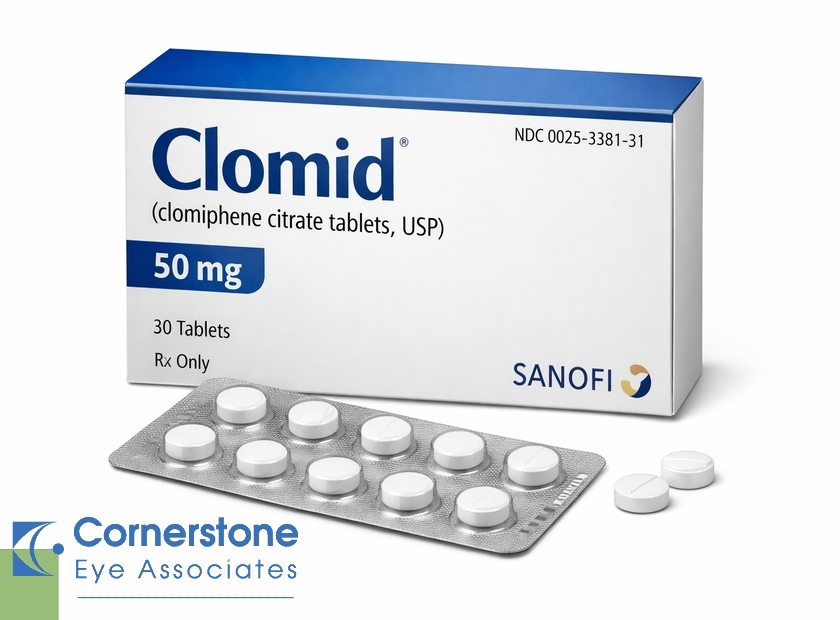
Clomid is an oral tablet that contains clomiphene citrate. It belongs to a class of medications known as selective estrogen receptor modulators, or SERMs. The FDA approved it in 1967 to help induce ovulation in women. Since then, it has remained one of the most commonly prescribed fertility treatments in the U.S. Generic versions are also widely available, which makes it much more affordable than many newer options.
Its mechanism is fairly simple. Clomiphene blocks estrogen receptors in the hypothalamus. When that happens, the brain reads the signal as if estrogen levels are too low. In response, it releases more gonadotropin-releasing hormone, or GnRH. That then tells the pituitary gland to produce more FSH and LH. In women, the rise in FSH helps support follicle growth and ovulation. In men, the increase in LH stimulates the testes to produce more testosterone naturally, without shutting down the body’s own hormone signaling.
That is why the same medication can be useful in two very different clinical settings. Because it stimulates the body’s own hormonal system instead of replacing hormones from the outside, it does not create the same fertility-suppressing effect often seen with exogenous testosterone. According to the FDA prescribing information for clomiphene citrate, the drug is officially approved for ovulatory dysfunction in women. Its use in men is considered off-label and should be evaluated separately by a clinician.
People who want to buy Clomid online are usually looking for a more convenient way to get a legitimate prescription. Telehealth platforms can make that process easier. For first-time patients, the evaluation is often simple and manageable when working with a licensed provider. Still, the medical requirements do not change just because the visit happens online. Your clinician will still need to review your hormone panel, menstrual cycle or testosterone history, and other relevant medical details before deciding whether Clomid is appropriate.
Clomid for Women: Ovulation Induction and PCOS
For women who do not ovulate on a regular basis, Clomid is often the treatment doctors try first. It helps create the hormonal signal the ovaries need to grow and release a mature egg. The most common reason for prescribing it is polycystic ovary syndrome, or PCOS, which is linked to a large share of clomiphene use worldwide. Women with PCOS often have elevated androgen levels, an imbalanced LH-to-FSH ratio, and poor follicle maturation. Clomid helps restore the hormonal signaling needed to move that process forward.
It may also be used in women with secondary amenorrhea, luteal phase dysfunction, or unexplained infertility when cycles are irregular. The response rates are well established. Around 80% of women with ovulatory problems will ovulate during the first three treatment cycles. Roughly half will become pregnant within three to six cycles. That combination of efficacy, simplicity, and lower cost is a big reason the medication is still used so widely. Because it is taken by mouth and used in short courses, it also fits well into treatment plans managed through telehealth.
The American Society for Reproductive Medicine (ASRM) patient information on clomiphene notes that clomiphene is generally suitable for women with confirmed ovulatory dysfunction, a normal uterine cavity, and at least one patent fallopian tube. Before treatment begins, a clinician will check that these conditions are met.
Who Is a Candidate for Clomid?
Women who may be good candidates for Clomid include those with PCOS, secondary amenorrhea, or unexplained infertility linked to irregular cycles. Before treatment starts, a baseline hormone panel is usually needed. This often includes FSH, LH, AMH, estradiol, and TSH. A semen analysis for the male partner is also an important part of the workup. Without both sets of information, it is much harder to understand where the fertility problem may actually be coming from.
Clomid is not the right option for every patient, though. It is generally not recommended for women with primary ovarian insufficiency, blocked fallopian tubes, or markedly elevated baseline LH levels. In these situations, the medication is unlikely to provide the response needed. Women over 40 are often advised to consider more targeted ovarian stimulation from the beginning instead of starting with Clomid. In the same way, women who do not respond after three treatment cycles should usually review other options with a reproductive endocrinologist rather than continuing without a clear benefit. A careful evaluation helps show whether Clomid makes sense as a first step or whether another strategy would be more appropriate from the start.
How to Take Clomid to Get Pregnant
The standard starting regimen is 50 mg once a day for five days in a row. Treatment usually begins on day 3, 4, or 5 of the menstrual cycle. Ovulation often happens about 7 to 10 days after the last tablet. Many clinicians check the response with a mid-cycle ultrasound around day 12 to 14. This helps confirm that a follicle is developing and makes it easier to time intercourse or IUI more accurately.
If ovulation does not occur at 50 mg, the dose may be raised to 100 mg in the next cycle. In some situations, 150 mg may also be considered. Even so, most guidelines recommend reassessing the plan after three to six monitored cycles. Going above 150 mg rarely improves results in a meaningful way. It is also more likely to increase side effects without clearly improving the chances of pregnancy.
A few simple steps can make the process more effective. Take the tablets at the same time each day to keep the drug level more consistent. Start using ovulation predictor kits, or OPKs, from about day 10 of the cycle. Then plan intercourse or IUI within the 24 to 36-hour window after a positive OPK result. When these steps are combined with proper monitoring, each cycle is given the best possible chance.
Women who choose to buy Clomid online through a telehealth provider usually follow the same treatment protocol. The main difference is practical, not medical. Lab orders and follow-up ultrasounds are arranged remotely instead of through an in-person clinic. The clinical standards themselves stay the same.
Signs Clomid Is Working
The clearest way to confirm that Clomid is working is to see a mature follicle on a mid-cycle ultrasound. In most cases, a follicle measuring 18 mm or larger is considered close to ovulation. A positive LH surge on an ovulation predictor kit is another useful sign. A serum progesterone level above 3 ng/mL on day 21 of the cycle can then confirm that ovulation has already happened. Together, these three markers give a clear picture of whether the treatment is having the desired effect.
Physical changes can offer helpful clues as well. Around the time of ovulation, cervical mucus often becomes clearer, more slippery, and more stretchy, much like raw egg white. Some women also notice breast tenderness or a mild feeling of pelvic pressure around days 12 to 16. A small rise in basal body temperature after ovulation may appear too. Still, these signs are not consistent enough to rely on by themselves. Ultrasound and lab testing remain much more dependable than physical symptoms alone.
It is also worth noting that some women ovulate on Clomid without feeling any obvious changes at all. That is why using an OPK together with a day-21 progesterone test can be such a practical option. It gives two separate points of confirmation without requiring extra office visits. For patients tracking their cycle from home through a telehealth-based plan, this approach is often both simple and effective.
Clomid for Men: The Fertility-Safe Alternative to TRT
For men with secondary hypogonadism, Clomid offers a very different way to raise testosterone levels. Traditional testosterone replacement therapy, or TRT, supplies testosterone from outside the body. When that happens, the brain reduces its own signaling to the testes. As a result, sperm production can fall sharply and, in some cases, stop altogether. For men who want to preserve fertility, that creates an important limitation.
Clomid works through a different pathway. Instead of replacing testosterone directly, it encourages the body to produce more of its own by stimulating the hypothalamic-pituitary-gonadal, or HPG, axis. This allows the testes to keep making both testosterone and sperm during treatment. The American Urological Association recognizes clomiphene as an off-label option for men with secondary hypogonadism. More detailed recommendations are outlined in the AUA Testosterone Deficiency Guideline. In practice, testosterone levels often begin to rise within 4 to 6 weeks. That effect usually levels off around 6 months, while improvements in sperm concentration may take closer to 9 months of ongoing treatment.
Cost is another reason some men consider Clomid through a telehealth provider. Generic clomiphene is usually much less expensive than injectable or topical testosterone therapy. It is also taken by mouth, so there is no need for weekly injections or daily gels. For the right patient, it can offer meaningful hormonal support in a format that is simpler to manage day to day.
Why Men Use Clomid Instead of Testosterone Therapy
The core clinical difference is what happens to sperm production. TRT suppresses it. Clomid preserves or improves it. For men actively trying to conceive, that distinction is decisive. The table below summarizes the key differences across the most clinically relevant parameters.
Research supports these clinical differences. A longitudinal study from UCLA found that testosterone levels improved significantly at 3 and 6 months of clomiphene treatment, with sperm concentration showing measurable gains by 9 months — confirming that both outcomes benefit from sustained treatment. Full data are available in Jiang et al. (PMC, 2023). These findings explain why clomiphene is increasingly considered a first-line off-label option for men who need hormonal support but want to preserve fertility. In contrast, men who choose TRT without this consideration may face a difficult and sometimes irreversible drop in sperm count.
Best Time to Take Clomid for Men
Unlike women, men do not take clomiphene in short five-day cycles. It is usually prescribed as a continuous treatment taken on a regular schedule. A common starting dose is 25 mg every other day or 25 to 50 mg daily. After that, the dose is adjusted depending on how hormone levels change over time. There is no universally best time of day to take it. What matters most is taking it consistently rather than focusing on a specific hour.
Monitoring usually starts after 4 to 6 weeks and continues again around the 3-month mark. The main lab values to follow are total testosterone, free testosterone, LH, FSH, estradiol, and SHBG. If estradiol rises too much, a low-dose aromatase inhibitor may be considered. It is not a good idea to change the dose on your own without lab-based guidance. Regular follow-up also makes it easier to spot plateaus early and adjust the plan before they become a bigger issue. Men who choose to buy Clomid online through a telehealth urology provider usually handle this process remotely. Lab orders are sent electronically, and the results are reviewed during the scheduled follow-up visit.
Clomid Cost Generic Options and How to Get a Prescription
Generic clomiphene citrate can start at around $0.44 per tablet, which makes it one of the more affordable prescription fertility medications in the U.S. Still, the cost of treatment usually includes more than the medication alone. You also need to account for the initial medical evaluation, any required lab testing, and follow-up appointments. At the same time, telehealth platforms have made the process of getting a Clomid prescription much faster and easier to manage.
Where can i buy Clomid legally? Through any licensed U.S. pharmacy once a clinician has issued a valid prescription. Many patients now go through the evaluation online instead of visiting a clinic in person. The medical standards are the same, even when the visit happens remotely. After the prescription is sent electronically, it can be filled at a local pharmacy or through a mail-order service. In many cases, discount programs like GoodRx or SingleCare can lower the final price, especially when patients are filling a larger quantity.
Our Physicians

Letrozole vs Clomid: Which Works Better?
Both clomiphene and letrozole work by increasing FSH and LH to support ovulation. The difference is in how they get there. Clomid works by blocking estrogen receptors in the hypothalamus. Letrozole works differently — it blocks the aromatase enzyme, which temporarily lowers estrogen levels in the body. That creates a slightly different hormonal setting during treatment, and for many women with PCOS, that setting may be more favorable.
The comparison most often referenced comes from a large NIH-funded multicenter trial. According to Legro et al. (NEJM, 2014), letrozole led to a live birth rate of 27.5%, compared with 19.1% for clomiphene in women with PCOS. Because of that, many fertility clinics now use letrozole as their preferred first-line option for PCOS. Still, the choice is not identical in every case. Letrozole is used off-label for ovulation induction and does not have FDA approval for that purpose. Clomid, by contrast, has been formally FDA-approved since 1967. It also tends to have wider insurance coverage and a lower cost per cycle. In real practice, some women respond better to clomiphene when letrozole does not lead to follicle growth, while others show the opposite pattern.
When PCOS is clearly confirmed, many clinicians now choose letrozole as the starting option. For unexplained infertility without a definite PCOS pattern, either medication may still be a reasonable option. The right choice usually depends on your diagnosis, how you responded to past treatment, and the overall cost of care. A careful discussion with your clinician can help determine which approach makes the most sense for your situation.
Clomid vs Enclomiphene: What Men Should Know
Enclomiphene is one part of clomiphene. It is the part believed to be mainly responsible for increasing testosterone. Standard Clomid contains two forms of the same compound: about 62% enclomiphene and 38% zuclomiphene. Researchers have studied enclomiphene on its own in men with secondary hypogonadism. The goal was to keep the part that helps raise testosterone and avoid some of the unwanted estrogen-like effects linked to zuclomiphene.
Early studies suggest that enclomiphene may raise testosterone as well as, or sometimes slightly better than, standard clomiphene. It may also create a more balanced hormonal response. However, as of 2025, enclomiphene is still not FDA-approved for treating hypogonadism. Even though several studies have already been completed, that approval has not happened. Because of this, standard clomiphene remains the more common off-label option for most men. It is more available, better known in practice, and usually more affordable. For men thinking about treatment, the process is still the same: a licensed clinician reviews hormone levels and decides whether a prescription is appropriate.
Side Effects of Clomid
Clomid can cause side effects, but they are usually manageable and rarely severe. In many cases, they settle down after the five-day course ends or once the dose is fine-tuned. Women and men may notice different effects because their hormonal systems respond differently to treatment. Still, most people are able to continue without major problems. Having a clear idea of what to expect often makes the experience less stressful and easier to navigate.
Most side effects can be handled with a few simple adjustments. Drinking enough water, dressing in light layers if hot flashes show up, and cutting back on caffeine during the cycle can make a noticeable difference. Mood changes tend to be most noticeable during the five days of treatment and usually ease a few days after the last tablet. In men using Clomid on a continuous schedule, the main issue worth keeping an eye on is rising estradiol. When it is picked up early through routine lab work, it is usually easy to manage.
Serious Side Effects That Require Medical Attention
Two situations call for a quick medical response. The first is ovarian hyperstimulation syndrome, or OHSS. In this condition, the ovaries become enlarged and painful. Warning signs include marked abdominal bloating, rapid weight gain of more than five pounds within 24 hours, significant pelvic pain, and shortness of breath. OHSS is uncommon at standard Clomid doses, but the risk can be higher in women with very high AMH levels or polycystic ovaries that respond too strongly to stimulation. If symptoms like these appear, treatment should be stopped and medical evaluation should be arranged without delay.
The second reaction that should never be ignored is any change in vision. This may include blurred vision, flashes of light, or dark spots in the field of view. These symptoms are not considered routine side effects and should be treated as a separate safety concern. If visual changes develop during treatment, the medication should be stopped that same day and the prescriber should be contacted right away. In most cases, the symptoms improve after the drug is discontinued. Continuing Clomid after visual symptoms appear is not considered appropriate.
Outside of those two urgent concerns, patients should also report severe headaches that do not pass, notable abdominal pain, or signs of an allergic reaction such as facial swelling or trouble breathing. These are not expected Clomid effects and need same-day medical attention. Serious complications remain uncommon when the medication is used at standard therapeutic doses. Even so, it is important to know which symptoms fall outside the normal range so that unusual reactions are recognized early. Patients who buy Clomid online through a licensed provider should still receive the same safety counseling before treatment begins.
Practical tips for managing common side effects
- Hot flashes: stay hydrated, wear layers, reduce caffeine intake during the active cycle days
- Mood swings: note the timing — they peak during the 5-day course and fade shortly after the last tablet
- Bloating: light movement and a lower-sodium diet reduce discomfort
- Men — elevated estradiol: discuss adding anastrozole with your clinician before adjusting the dose yourself
- Any vision change: stop the medication immediately and contact your provider the same day
Most Frequently Asked Patient Questions
How many cycles of Clomid is it safe to take?
Can Clomid cause twins or multiple pregnancies?
Can men take Clomid for low testosterone?
Does Clomid affect cervical mucus, and does that reduce the chance of pregnancy?
What happens if Clomid does not work after several cycles?
What is the difference between Clomid and enclomiphene?
About The Author

Dr. Jill Arliss, M.D. is a board-certified obstetrician-gynecologist with about 25 years of experience in women’s health, practicing in the Victor, New York area. She earned her medical degree from Albany Medical College and completed her obstetrics and gynecology residency at the Mountain Area Health Education Center in North Carolina. Her care spans routine gynecologic visits, contraception and family planning, pregnancy and childbirth, gynecologic surgery, and the transition through menopause, with a focus on clear, patient-centered guidance.
Disclaimer
The information provided on this page is intended for general educational purposes only and does not constitute medical advice, diagnosis, or treatment. Health conditions, symptoms, and treatment responses vary significantly between individuals. There is no universal approach suitable for every patient.
Medical decisions should only be made in consultation with a licensed healthcare professional who can evaluate your medical history, current medications, underlying conditions, and individual risk factors. Information on this page should not be used to determine treatment plans, medication selection, dosage, or to assess potential drug interactions.
This content is not a substitute for professional medical care. Before starting, modifying, or discontinuing any medication or therapy, seek guidance from a qualified physician, pharmacist, or other licensed clinician who can provide personalized medical advice based on a proper clinical assessment.
If you have questions or concerns regarding your health, treatment options, or medications, always consult a licensed medical professional.
Related Pages